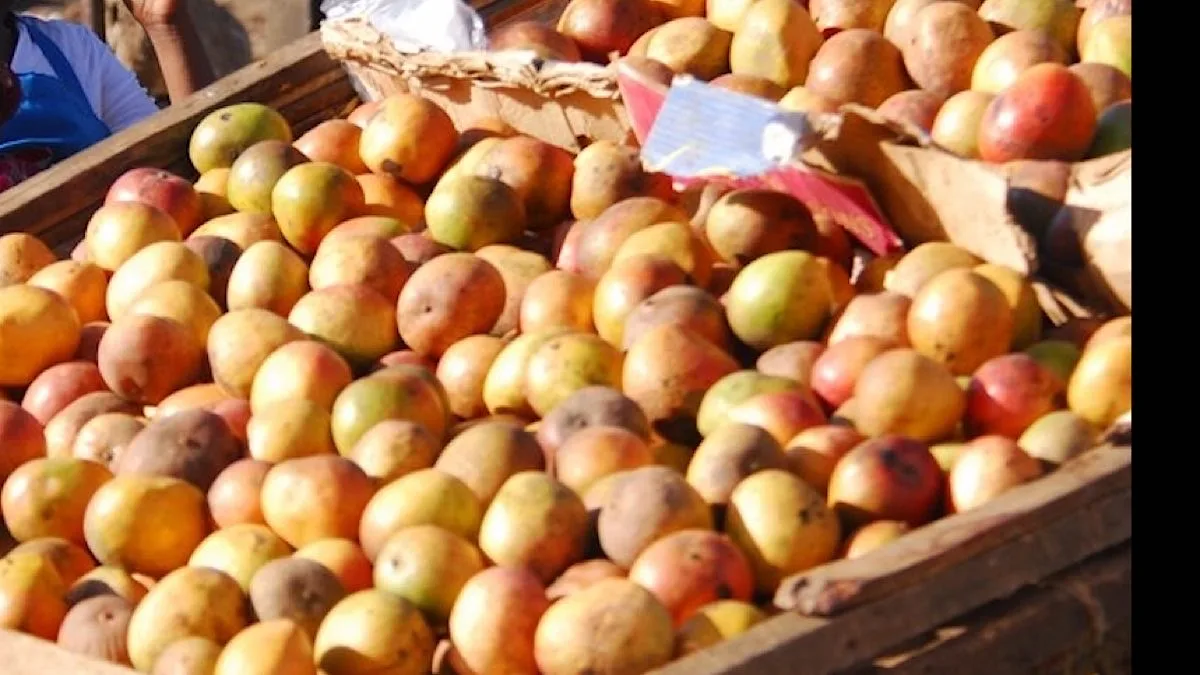
It is peak mango season in India. The Alphonso harvest is at its richest, the Kesar at its most fragrant. Exporters across Maharashtra, Gujarat, and Uttar Pradesh have prepared their consignments. And Japan, one of the world’s most demanding and most lucrative fruit markets, has shut its doors. In March 2026, Japanese quarantine inspectors conducted their routine pre-season visit to India’s Vapour Heat Treatment (VHT) facility in Rehmanpur, Uttar Pradesh. Their findings were not routine.
The Yokohama Plant Protection Association subsequently issued a directive rejecting all mango consignments bearing inspection certificates issued on or after 25 March 2026. Imports, it stated, would remain suspended until Japan was satisfied that operational standards had improved. The implications extend well beyond this season’s lost revenue. They speak to a structural failure in how India manages the relationship between agricultural ambition and agricultural compliance. The history of Indian mangoes in Japan is a study in the extraordinary difficulty of gaining access to a premium market and the relative ease with which that access can be lost.
Advertisement
Japan first banned Indian mangoes in 1986, citing fears that fruit flies carried within the fruit could devastate Japanese agriculture. Fruit flies are not a minor concern. These insects lay their eggs inside the fruit; after hatching, the larvae feed on the pulp, rotting the fruit from within and causing production to collapse. Countries like Japan, Australia, New Zealand, and the United States maintain some of the world’s strictest quarantine systems precisely because a single invasive pest species entering unchecked can destroy entire agricultural sectors.
Mediterranean fruit fly outbreaks, for instance, have caused billions of dollars in damage globally. Japan maintains what it describes as a zero-risk approach. Every consignment, every facility, every certification is scrutinised with that standard in mind. After the 1986 ban, India spent the next two decades working to meet it. Large-scale pest surveys were conducted. Scientific field studies and laboratory testing were undertaken.
VHT infrastructure (treatment chambers in which mangoes are exposed to precisely controlled heat and humidity to kill any eggs or larvae inside the fruit, without chemical residue and without compromising freshness) was installed specifically to meet Japanese requirements. Japanese inspection teams were invited. Three years of continuous surveys were completed. Then-Commerce Minister Kamal Nath took up the matter with Japanese authorities. In June 2006, Japan formally lifted the ban. Indian mangoes, specifically varieties including Alphonso, Kesar, Langra, Banganapalli, Chausa, and Malika from approved exporting states including Maharashtra, Gujarat, Andhra Pradesh, Uttar Pradesh, and West Bengal, entered one of the world’s most prestigious fruit markets.
For nearly 20 years, the trade continued without incident. The process that restored Indian mangoes to Japan in 2006 rested on one critical technology: Vapour Heat Treatment. VHT is internationally recognised and accepted by Japan, South Korea, Australia, New Zealand, and the United States as one of the safest, most effective ways to eliminate fruit flies. But its effectiveness depends entirely on precise execution: correct temperature, correct duration, accurate monitoring, and proper certification.
Even small procedural failures can invalidate the entire treatment. But VHT is only as trustworthy as the facility operating it. Japan does not certify a country; it certifies a system, and if the system fails, so does the certification. When Japanese inspectors visited the Rehmanpur facility in March 2026, they found deficiencies across multiple dimensions: fumigation procedures, disinfection systems, operational standards, and quarantine compliance measures. The precise technical details have not been publicly disclosed.
What is clear is that Japan considered the shortcomings serious enough to suspend all imports, choosing not to issue a warning or demand corrective action within a defined window, but to act immediately and comprehensively. Some exporters have expressed frustration, arguing that the failure of one or two facilities should not have resulted in a blanket rejection of all consignments, and that the insp election process appeared excessively strict. These concerns are understandable, particularly for exporters whose facilities were compliant. But Japan’s position is equally clear: operational standards are not negotiable, and the zero-risk approach does not permit selective enforcement.
The 2026 suspension is significant not only for what it reveals about one facility in Uttar Pradesh, but for what it reveals about India’s approach to sustaining premium export market access. India is the world’s largest mango producer, growing over a thousand varieties and producing millions of tonnes annually. Of that, 3,000 to 5,000 metric tonnes are exported each year, generating approximately USD 40 to 50 million in foreign exchange. Japan represents a smaller share of that volume, but its value per unit is disproportionately high. Japanese consumers pay double or triple the prices obtained in other markets for verified, high-quality fruit.
Small volume does not mean small importance. Yet evidence suggests that the infrastructure required to maintain Japanese market access was not kept to the standard that access demands. The question worth asking is: who was responsible for monitoring compliance between Japanese inspection visits? What internal audit systems existed? Were the deficiencies identified in 2026 new failures, or long-standing ones that had not previously been caught? India’s agric ultural exp or t frameworks have historically focused on securing market access: the negotiations, the protocols, the diplomatic effort.
What tends to receive less sustained attention is the harder, less visible work of maintaining that access: continuous facility upgrades, rigorous internal compliance audits, investment in monitoring technology, and the cultivation of an institutional culture that treats quarantine standards not as an external imposition but as a professional obligation. The timing of the 2026 ban, at the height of the export season, has maximised its immediate economic damage. But the longer-term reputational risk may be more consequential. Agricultural trade is built on trust.
When Japan questions the reliability of India’s quarantine systems, other importing countries take notice. They begin asking whether India’s treatment protocols are consistently applied, whether its certification systems are robust, whether its inspections are genuinely independent. The concern does not remain contained to mangoes. It extends to every category of fresh fruit and vegetable in which India is attempting to build or expand export markets. This is precisely why exporters are right to be alarmed, and why the government’s response must go beyond quiet diplomacy. Regaining Japanese market access will require more than an apology and a promise.
It will require the kind of sustained, demonstrable effort that preceded the 2006 restoration, this time directed not at market entry, which has already been achieved, but at systemic compliance reform. VHT facilities must be upgraded and their monitoring systems modernised. Internal compliance regimes must be strengthened, with better fumigation procedures and rigorous record-keeping. Japan must b e invited to conduct re-inspections and must be able to see corrective actions demonstrated, not simply promised. Digital certification and improved export documentation must reduce the margin for procedural error.
And the engagement with Japanese plant protection authorities must be continuous, not seasonal. Above all, India’s agricultural export institutions need to internalise a principle that Japan has always applied: in a zero-risk market, there is no such thing as near enough. The 1986 ban lasted 20 years. The 2006 restoration required three years of continuous surveys, ministerial engagement, and the installation of new infrastructure. That investment was not a one-time achievement. It was a commitment that required ongoing renewal, and in 2026, that commitment appears to have lapsed. The mangoes are ready. The market is willing. The failure is institutional. And institutional failures, unlike harvests, do not recover in a season.
(The writer is director-Mrikal (AI/Data Center) and a young alumni member, Government Liaison Task Force, IIT Kharagpur, and tweets as @ipravinkaushal)